
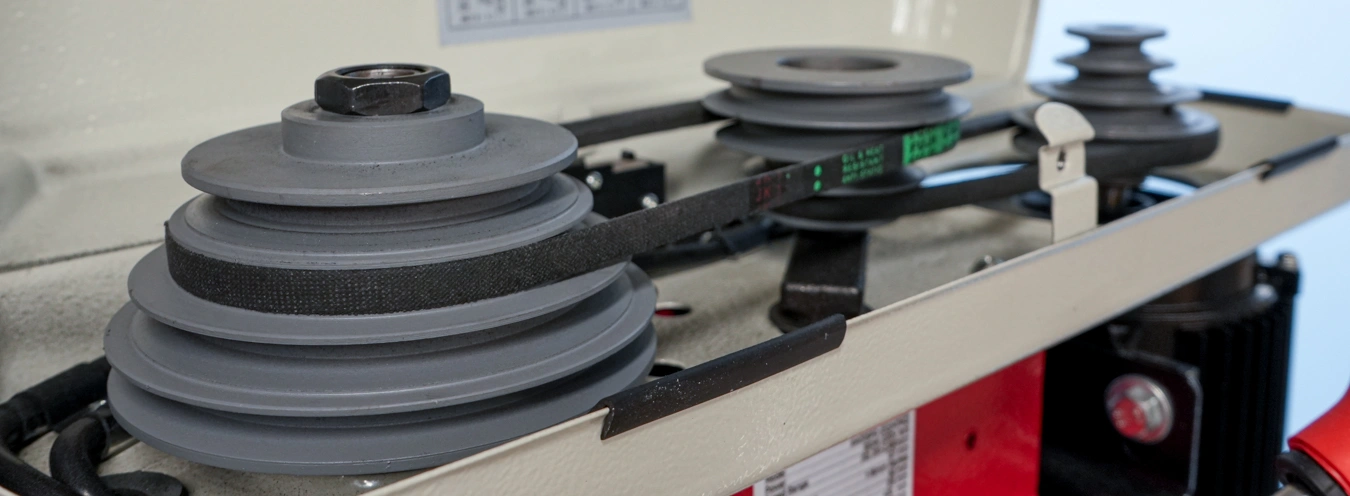
Find the recommended drill speed for different drill bits, sizes and materials using our drill speed chart. Covering common woodworking and metalworking applications, the chart provides recommended operating speeds (RPM) for twist drills, brad point bits, Forstner bits, holesaws, spade bits, countersinks and plug cutters. It includes a range of materials, from softwood and hardwood to acrylic, brass, aluminium and steel, helping you choose the right speed for your project. Whether you’re using a pillar drill or another type of drill, use the chart as a guide to selecting the appropriate speed.
This chart shows recommended operating speeds (in RPM) for many different drill bits.
| Bit Size | Softwood | Hardwood | Acrylic | Brass | Aluminium | Steel |
|---|---|---|---|---|---|---|
Twist Drill Bit | ||||||
Ø 1mm – 5mm |
3000 |
3000 |
2500 |
3000 |
3000 |
3000 |
Ø 6mm – 10mm |
3000 |
1500 |
2000 |
1200 |
2500 |
1000 |
Ø 11mm – 15mm |
1500 |
750 |
1500 |
750 |
1500 |
600 |
Ø 16mm – 25mm |
750 |
500 |
na |
400 |
1000 |
350 |
Brad Point Drill Bit | ||||||
Ø 3mm – 9mm |
1800 |
1000 |
1500 |
na | ||
Ø 10mm – 15mm |
1800 |
750 |
1500 |
na | ||
Ø 16mm – 20mm |
1400 |
250 |
750 |
na | ||
Ø 21mm – 25mm |
1200 |
250 |
250 |
na | ||
Forstner Bit | ||||||
Ø 6mm – 10mm |
2400 |
700 |
na | |||
Ø 11mm – 17mm |
2400 |
500 |
250 |
na | ||
Ø 18mm – 25mm |
1500 |
500 |
250 |
na | ||
Ø 26mm – 32mm |
1000 |
250 |
250 |
na | ||
Ø 33mm – 50mm |
500 |
250 |
na | |||
Holesaw | ||||||
Ø 16mm – 50mm |
1000-500 |
350 |
1000 |
350 |
500 |
250 |
Ø 51mm – 100mm |
500-250 |
250 |
500 |
200 |
250 |
150 |
Ø 101mm+ |
250 |
na |
500 |
100 |
100 |
50 |
Spade Bit | ||||||
Ø 6mm – 13mm |
2000 |
1500 |
na | |||
Ø 14mm – 25mm |
1750 |
1500 |
na | |||
Ø 26mm – 38mm |
1500 |
1000 |
na | |||
Countersink | ||||||
All Sizes |
1000 |
750 |
750 |
250 |
250 |
250 |
Plug Cutters | ||||||
All Sizes |
1000 |
500 |
na | |||
Drill Speeds for Acrylic, Brass, Aluminium and Steel NOT visible on mobile devices.
| Bit Size | Softwood | Hardwood | ||||
|---|---|---|---|---|---|---|
Twist Drill Bit | ||||||
Ø 1mm – 5mm |
3000 |
3000 | ||||
Ø 6mm – 10mm |
3000 |
1500 | ||||
Ø 11mm – 15mm |
1500 |
750 | ||||
Ø 16mm – 25mm |
750 |
500 | ||||
Brad Point Drill Bit | ||||||
Ø 3mm – 9mm |
1800 |
1000 | ||||
Ø 10mm – 15mm |
1800 |
750 | ||||
Ø 16mm – 20mm |
1400 |
250 | ||||
Ø 21mm – 25mm |
1200 |
250 | ||||
Forstner Bit | ||||||
Ø 6mm – 10mm |
2400 |
700 | ||||
Ø 11mm – 17mm |
2400 |
500 | ||||
Ø 18mm – 25mm |
1500 |
500 | ||||
Ø 26mm – 32mm |
1000 |
250 | ||||
Ø 33mm – 50mm |
500 |
250 | ||||
Holesaw | ||||||
Ø 16mm – 50mm |
1000-500 |
350 | ||||
Ø 51mm – 100mm |
500-250 |
250 | ||||
Ø 101mm+ |
250 |
na | ||||
Spade Bit | ||||||
Ø 6mm – 13mm |
2000 |
1500 | ||||
Ø 14mm – 25mm |
1750 |
1500 | ||||
Ø 26mm – 38mm |
1500 |
1000 | ||||
Countersink | ||||||
All Sizes |
1000 |
750 | ||||
Plug Cutters | ||||||
All Sizes |
1000 |
500 | ||||
- NA = Not a recommended drill bit for material
- Recommendations are based on visual and tactile tests under workshop conditions.
- Drilling faster than recommended can cause overheating.
- Speeds slower than recommended may cause poor quality holes.
- All wood testing done on face grain. Reduce speeds when drilling end grain.
- Speeds based on new bits from the factory.
Types of Drill Bits
Twist Drill Bit
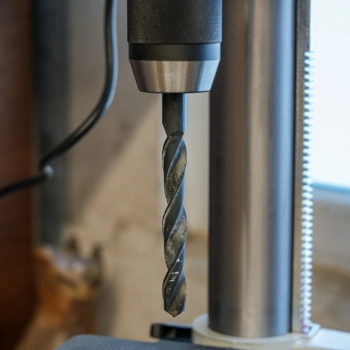
Twist drill bits are general-purpose cutters, primarily used for drilling holes in metal, but also suitable for wood and plastics. Their spiral flutes help remove waste as the bit cuts, making them a versatile workshop essential.
Tips: Use a centre punch to prevent wandering when drilling metal. Reduce the speed as the bit diameter increases and use cutting fluid when drilling steel.
Brad Point Bit

Brad point bits are designed for accurate, clean holes in wood. Their central point locates the bit, while the outer spurs score the wood fibres before cutting, reducing breakout and producing cleaner edges.
Tips: Use a backing board to minimise breakout on the underside. Clear the flutes regularly when drilling deeper holes.
Forstner Bit
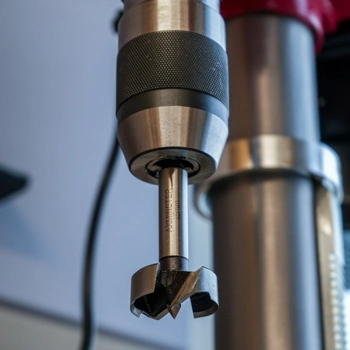
Forstner bits cut large, flat-bottomed holes in wood. They produce clean, accurate results and can drill overlapping holes, making them ideal for furniture making and recesses for concealed hinges.
Tips: Use a pillar drill where possible and clamp the workpiece securely. Reduce the speed for larger diameters and withdraw the bit regularly to clear waste.
Holesaw
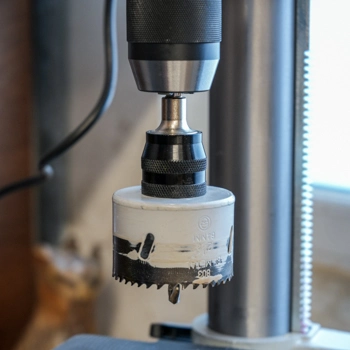
Holesaws cut large-diameter holes in wood, metal and plastics, depending on the blade type. They remove material around the perimeter rather than cutting out the entire centre, making them efficient for larger openings.
Tips: Choose a blade suited to the material and clamp the workpiece securely. Avoid excessive pressure and clear waste regularly.
Spade Bit
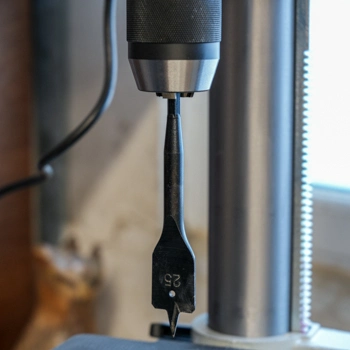
Spade bits are an economical option for drilling larger holes in wood. Their flat, paddle-shaped design cuts quickly, making them useful for cable and pipework holes where a clean finish isn’t essential.
Tips: Use a backing board to reduce breakout. Maintain a firm grip, apply controlled pressure and reduce the speed for larger bits.
Countersink
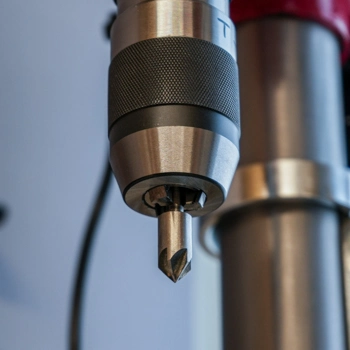
Countersink bits create a conical recess around a drilled hole, allowing countersunk screw heads to sit flush with or below the surface. They are commonly used in woodworking and metalworking for a neat finish.
Tips: Drill the pilot hole first, then countersink using light pressure. Check the depth regularly to avoid removing too much material.
Plug Cutter
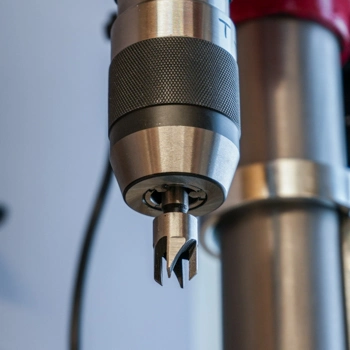
Plug cutters produce small wooden plugs used to conceal screw heads, fixings and other holes. Cutting plugs from matching timber helps them blend into the surrounding surface, making them ideal for furniture making.
Tips: Use a pillar drill and clamp the timber securely. Choose a cutter slightly larger than the hole and match the grain direction when fitting the plug.
